
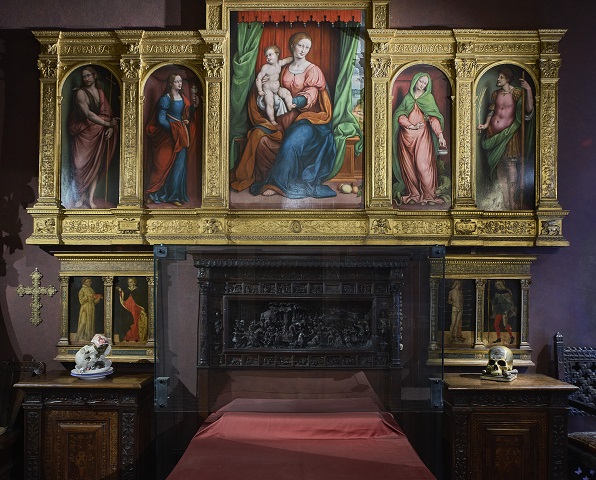
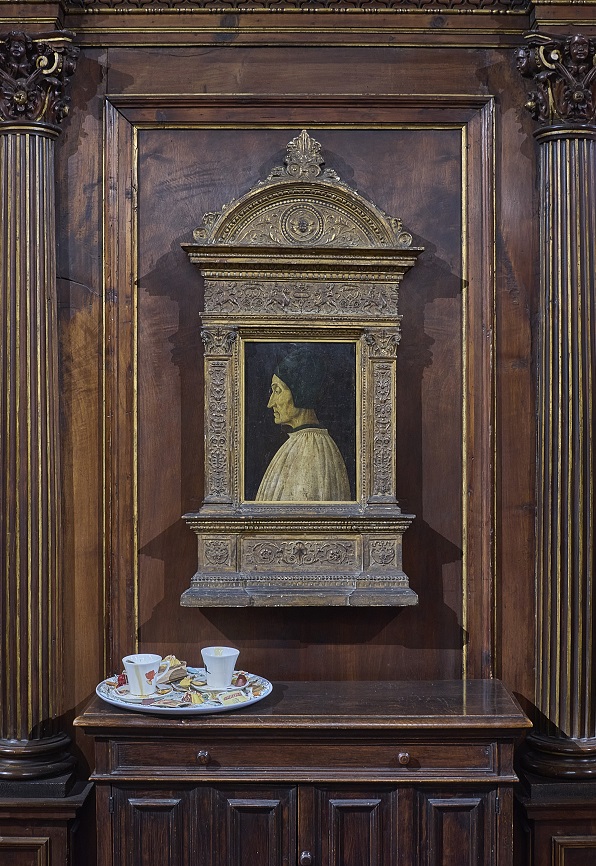
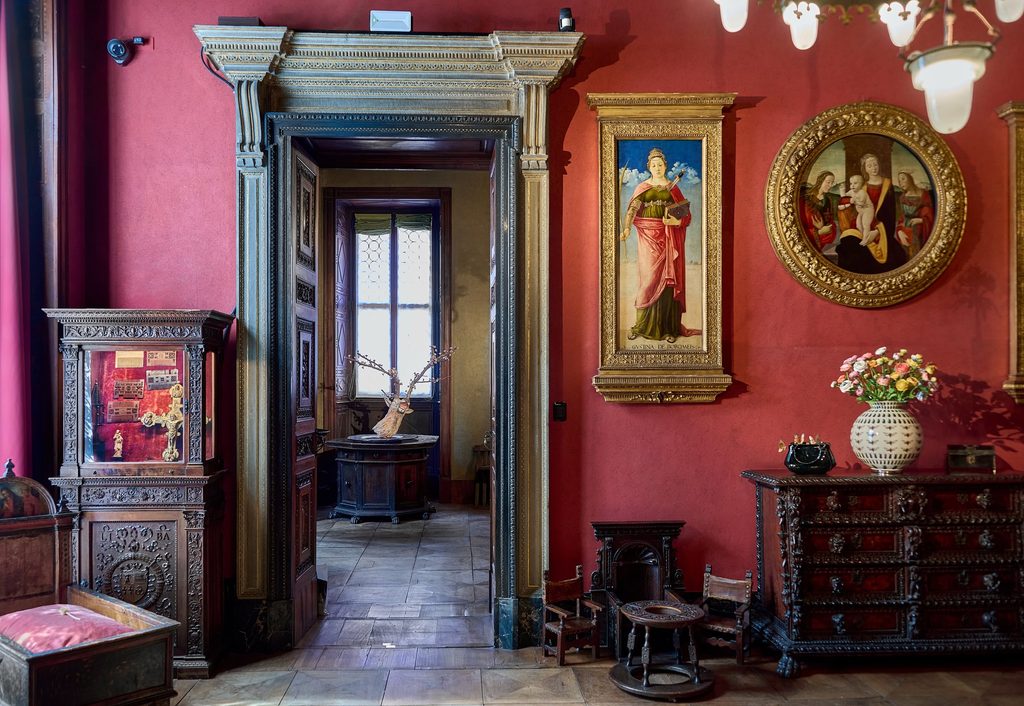
Well, this time no one will be able to say that the works on show could just as easily have been made by our six-year-old nephew during an art lesson in his first year of primary school. With their vertiginous hyperrealism, their direct and vaguely unsettling expressiveness, the ceramics of Bertozzi & Casoni are about as contemporary as one could imagine; and precisely for this reason, the refinement and mastery of their making introduce into the act of looking a state of mild disorientation. All the more so when the exhibition is staged in a setting such as the Palazzo Bagatti Valsecchi in Milan — a house-museum furnished in neo-Renaissance taste from the last quarter of the nineteenth century onwards and still preserved intact by the foundation that bears its name.
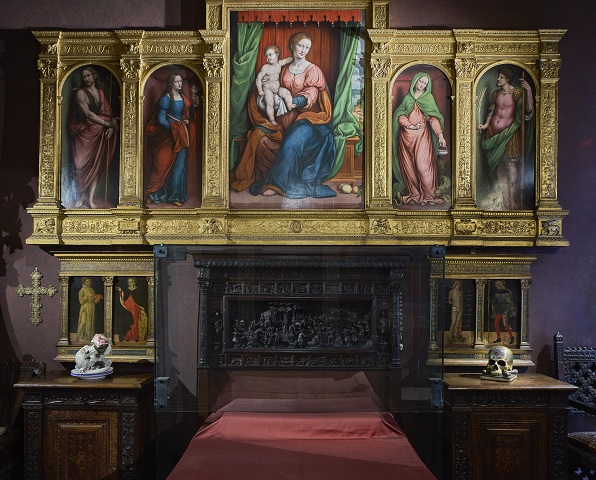
A setting rendered heavy with an ominous, faintly oppressive atmosphere by its boiseries, its furnishings, and its paintings, almost all of sacred art from the fifteenth and sixteenth centuries. It is difficult to come away with any different impression when confronted with the skulls resting on the bedside tables in the bedrooms of Giuseppe and Fausto — one in eighteenth-century ivory, the other in copper and gilded brass with a clock face embedded in the frontal bone — reminders, for more than half a century now, that the time of men and things has run out.
In short, the house today presents itself as a gigantic memento mori in which the age of its objects is wedded to their devotional and temporal content, reminding us that time passes, and that its passing, however slow, is implacable.
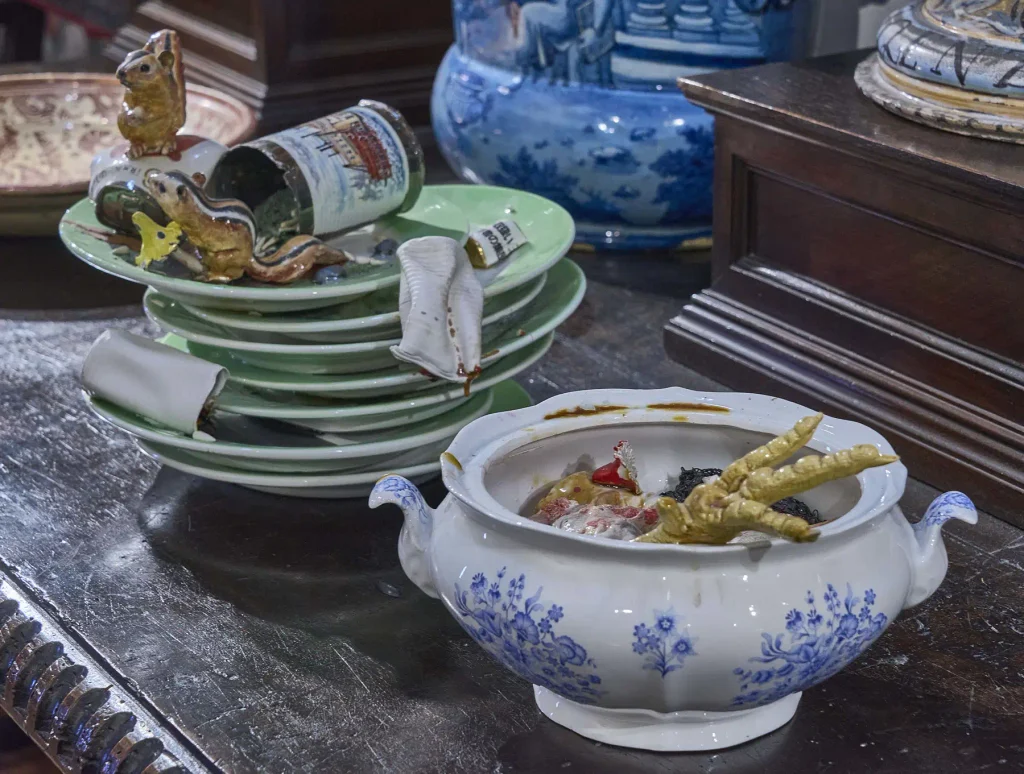
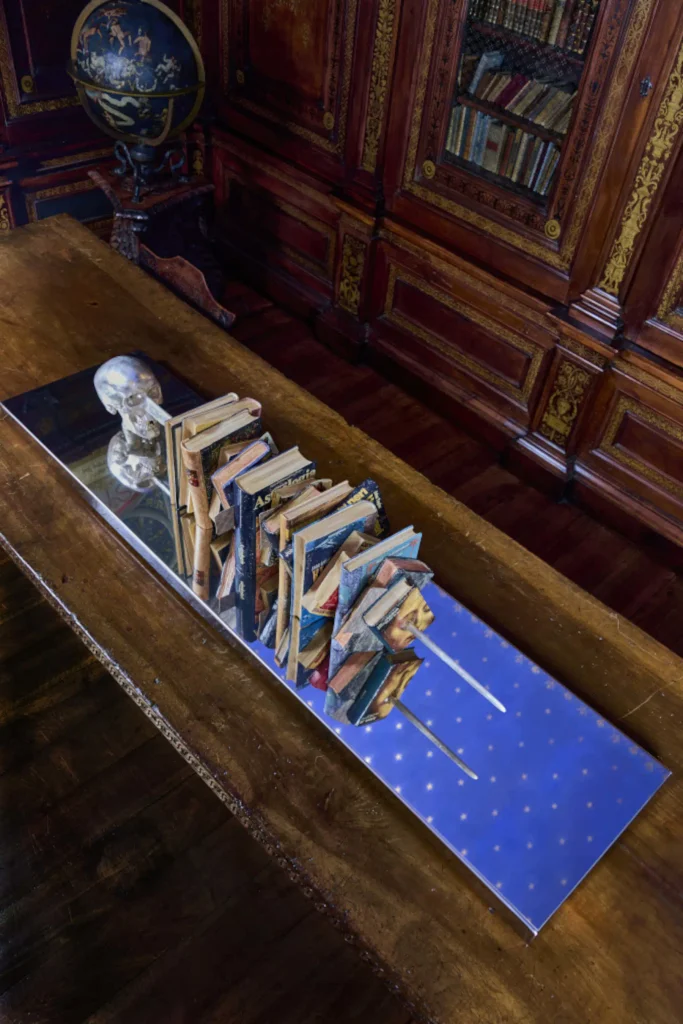
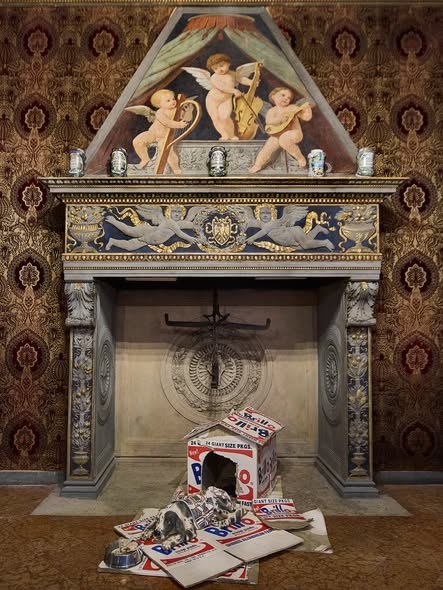
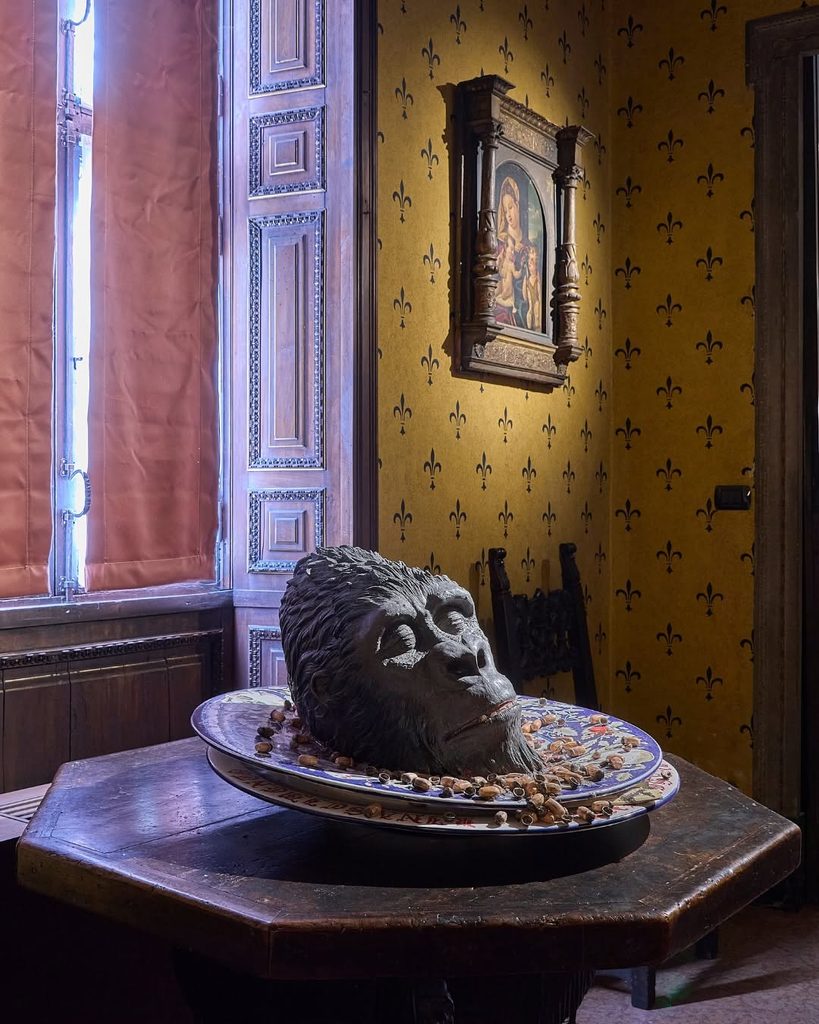
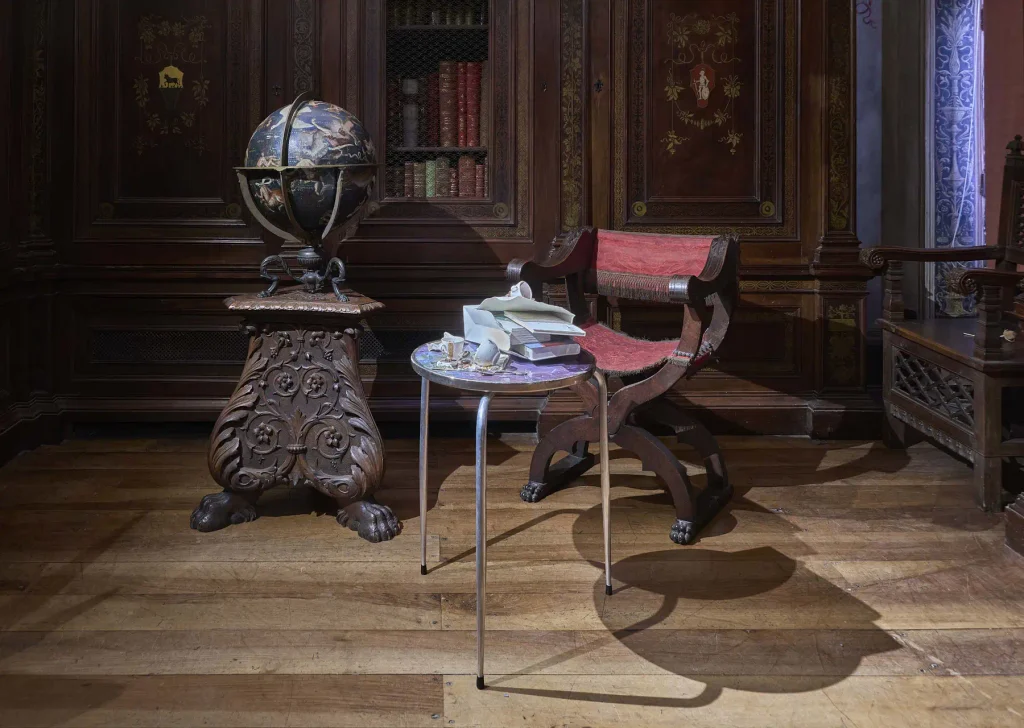
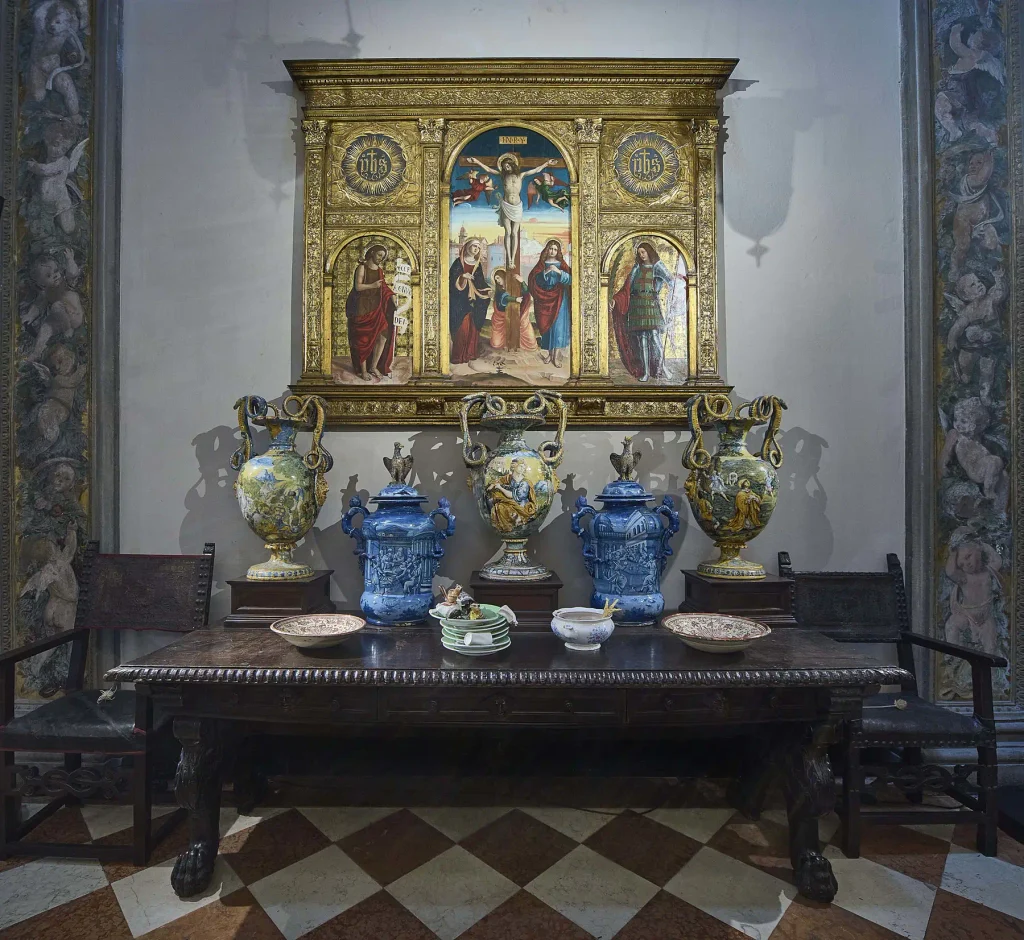
And it is here that the ceramics of Bertozzi & Casoni have been installed since 18 September 2026, where they will remain until 25 October. Some fifty “eternal and fragile presences” — as the exhibition title has it — have temporarily displaced the objects that furnished tables, consoles, and commodes, taken possession of the mouths of fireplaces, and begun a dialogue with the pre-existing arrangement that is as apt as it is irreverent, in an operation that could not have been more site-specific. On the bedside table in the Red Room, for instance, on the other side of the clock-skull, another cranium balanced on a stack of plates grips in its mandible what appears to be a half-crushed can of Indian tea, propped against a battery and a trombetta dei morti — a violet-hued fungus that I would wager was not chosen by chance.
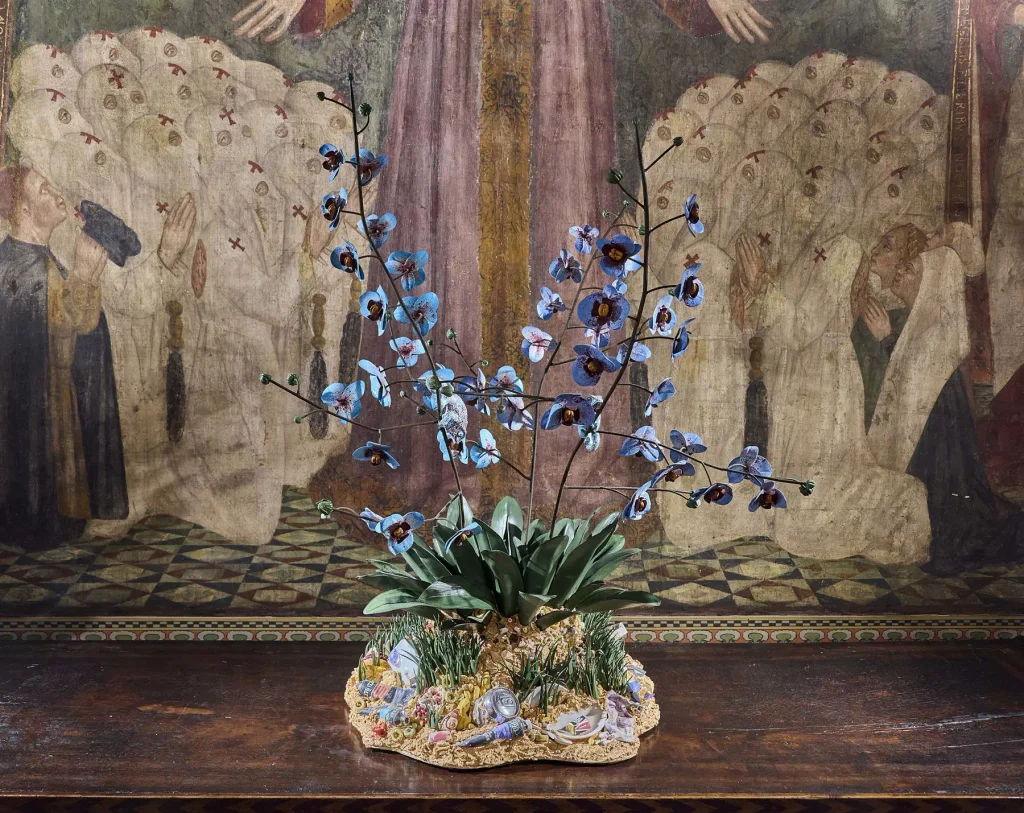
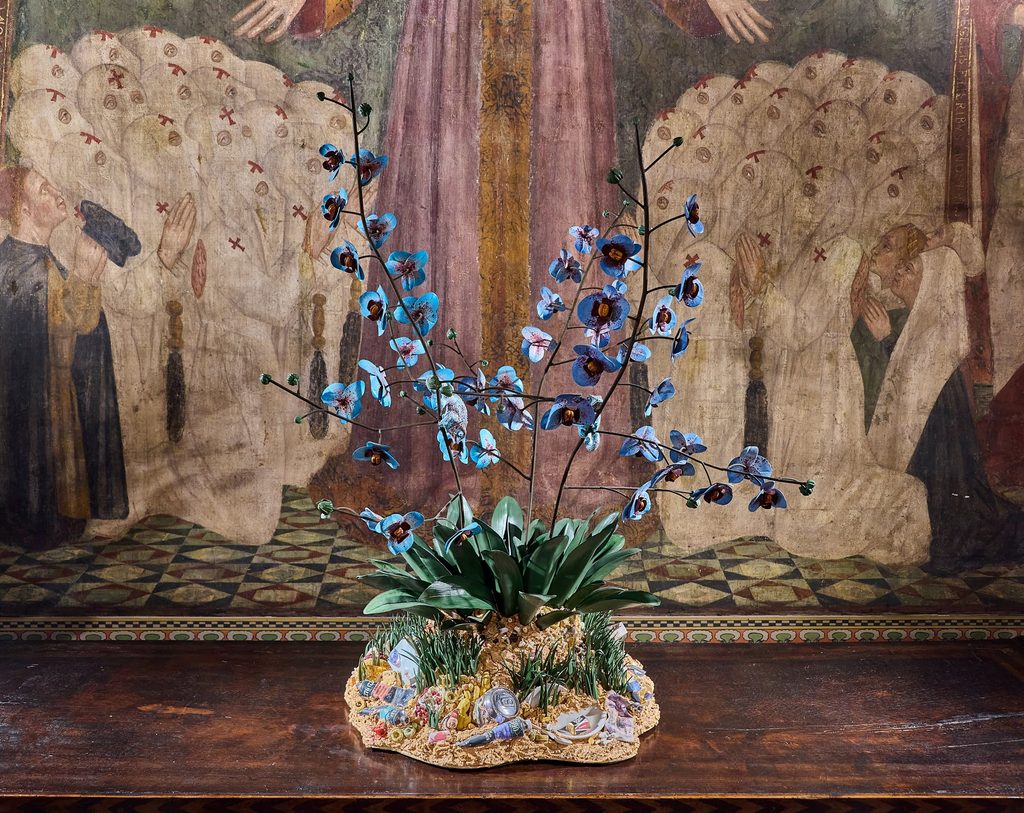
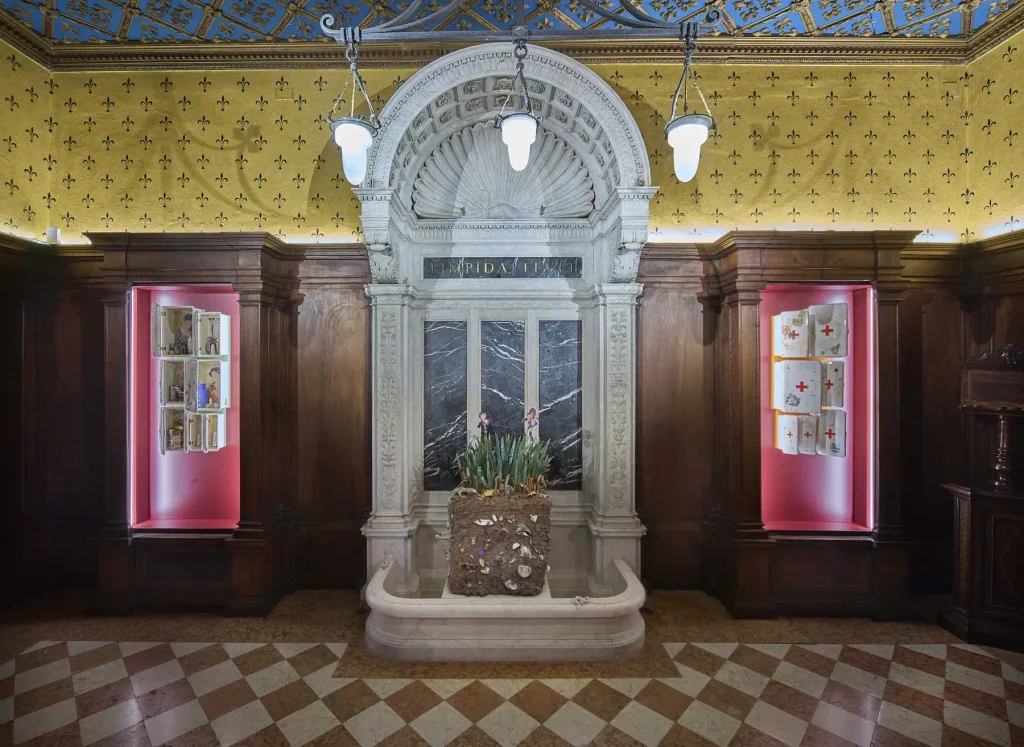
The remains of meals consumed and heaped in a state of abandonment in which leftovers deteriorate and rot constitute one of the recurring elements in the installation; another is the clod of earth — a clear reference to Dürer’s masterpiece — though Bertozzi & Casoni’s specimens also reveal core samples of the soil beneath, shown to be cluttered with refuse, insects, and human and animal remains: an instance of dystopian naturalism to which we would do well to return every time we gaze at a flowerbed and think of “nature.”
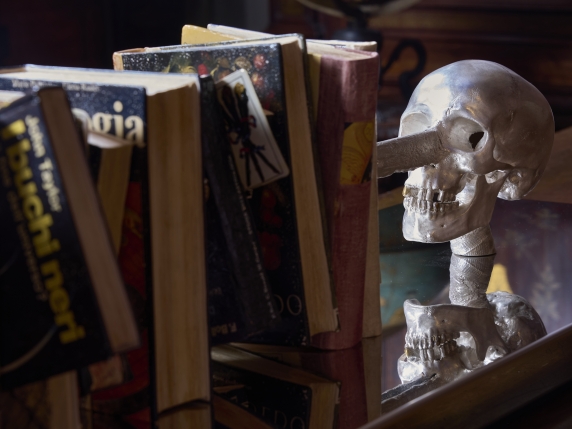
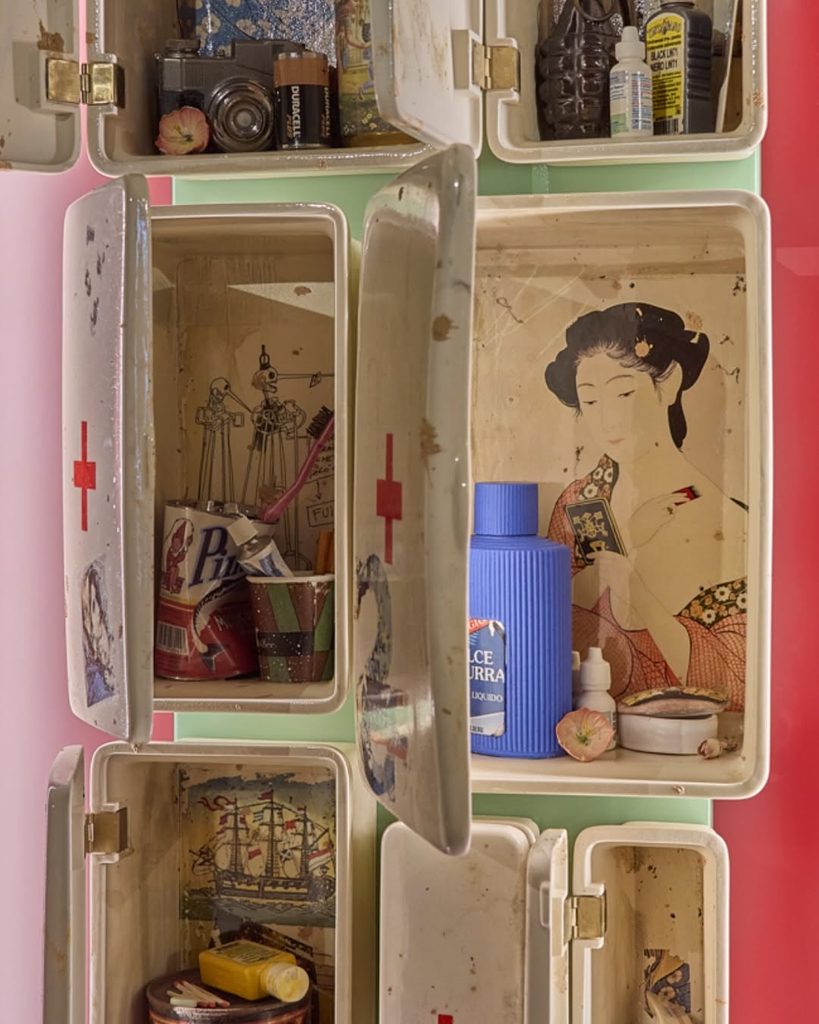
And then the wilted flowers, the severed heads of sacrificial animals, the handbags, the panels of small lockers of the kind once found in every bathroom. And the books — those propping up an old suitcase-style record player, and those impaled on Pinocchio’s pointed nose, holding in forced proximity esoteric essays, confessional pamphlets, astrology manuals, and erotic literature. Each of these objects carries a message to be deciphered, a correspondence to be sought: why so many Pinocchios, depicted across volumes, comics, découpage, stickers? Could the Christmas-tree toppers found resting on a breakfast tray also be references to the puppet? And why does a handbag conceal the same plastic dolphin — which brings to mind a water pistol that many of my generation had as children — that appears in one of the plastic lockers? And what to make of the Brillo Box serving as kennel and rug for a dog?
The game promises never to end — not least because the works themselves, in their peculiar, complex, and delicate materiality, lend themselves to furnishing further, perhaps involuntary (though who can say?) levels to this mise en abyme of references. As happens with the work Vassoio (Tray) from 2005 — a small still life in which a skull peeps out from beneath a napkin on which rest the remains of a snack and an upturned cone from which a vanilla ice cream, by now melted, has spread across the surface. At the very centre of the cream, a thread of glaze crosses the surface, reminding us that what we are looking at is an illusion, a deception — and that this very deception, which speaks of the vanity of worldly things, ends up displaying its own fragilities and the furrows that run through its beauty.
A game in which the public, too, has taken part — or at least one sharp-eyed visitor has, having slipped a wrapper from one of those fizzy sweets among the debris on a plate in one of the works. Only a vigilant attention to the overall chromatic composition allowed another visitor to notice the unauthorised addition — which was, it must be said, entirely in keeping with the anthology of tea bags, peanut shells, overturned espresso cups, and cigarette butts already crowding the sculpture.
In short, every glance on this visit yields a nourishing surprise — even if one of the delightful ladies who watch over the museum let slip, with some reticence, that she considers this irreverent intrusion of the contemporary into the neo-Renaissance sanctuary of the Bagatti Valsecchi household something of an outrage. One wonders whether the house’s laden furniture and the ponderous self-regard of its rooms thought the same of their impertinent guests.
Bertozzi & Casoni
Eterne e Fragili Presenze
Dal 18/09/2026 al 25/10/2026
Museo Bagatti-Valsecchi, via del Gesù 5, Milano
Immagini dalla pagina Facebook del Museo Bagatti-Valsecchi e dal sito Finestre sull’Arte
English translation based on Claude.ai translation services.